
You get your paycheck. The top number looks great. But the amount that hits your bank account? Much smaller. It’s like ordering a meal at a restaurant. The menu price draws you in. Then taxes, tip, and fees shrink what you actually enjoy.
Gross income means total earnings before any cuts. Net income is take-home pay after deductions. Or for businesses, profit after all costs. People mix them up all the time. This leads to budgeting fails or tax surprises.
Why care? You budget on net to avoid overspending. Lenders check gross for loans. Businesses track both for health. This post covers definitions, examples, differences, and tips. You’ll spot the gap fast and make smarter choices.
Gross Income: Your Total Earnings Before Any Deductions
Gross income adds up all money you earn. No subtractions yet. Think wages, tips, sales, or bonuses. It shows earning power raw.
For you, it’s the starting salary figure. Employers use it for tax reports. For companies, gross income often means gross profit. That’s sales minus direct costs like materials.
The formula stays simple. Individuals multiply hours times rate. Businesses subtract cost of goods sold from revenue. Gross sets the base. Taxes and loans build on it.
It differs from adjusted gross income (AGI). AGI pulls out some adjustments like student loan interest. Gross keeps everything in first.
How Gross Income Looks on Your Paycheck
Check your pay stub. Gross pay sits at the top. It lists salary, overtime, or commissions.
Say you work 40 hours at $20 an hour. Gross hits $800. Add a $100 bonus. Now it’s $900. Employers report this to the IRS.
Taxes start from here. But gross itself stays untouched. For details on paycheck basics, see Paychex’s guide on gross vs net pay.

Stubs break it down clear. Sources include base pay plus extras. Gross matters for W-2 forms too.
Gross Income in a Business Setting
Businesses calculate gross differently. Total sales minus direct costs. Ignore rent or ads yet.
A coffee shop sells $10,000 in drinks. Beans and cups cost $4,000. Gross income equals $6,000. It shows production efficiency.
This figure guides pricing. High gross means good margins on goods. Low signals cost issues.
For more on business gross profit, check Slash’s explanation of gross vs net profit.

Gross profit helps compare years. It flags if sales cover basics.
Net Income: The Money You Actually Keep or Profit
Net income subtracts everything. Taxes, insurance, expenses. What’s left is yours to spend or save.
Personal net is take-home pay. Businesses call it net profit or bottom line. It reveals true health.
Formula: gross minus all deductions. From $900 gross, pull 20% taxes and benefits. Net lands at $650. Simple as that.
Net shows spending power. Or if a business runs in the red. Expenses beat gross? Net goes negative.
Analogy fits bills after payday. Pay rent, groceries, loans. Remainder funds fun.
Calculating Your Personal Take-Home Pay
Deductions stack up fast. Federal tax, state tax, Social Security at 6.2%, Medicare at 1.45%. Add health premiums or 401(k).
A $50,000 yearly gross salary. After cuts, net might hit $38,000. Check 2026 brackets for clues. Single filers pay 10% on first $12,400 taxable income.
Use pay stubs monthly. Adjust W-4 if over-withheld.

Tools like IRS estimators help predict. Net varies by state too.
Net Profit for Businesses After All Costs
Companies subtract operating expenses next. Salaries, utilities, marketing, rent. Then taxes.
From $6,000 gross, deduct $3,500 costs. Net profit: $2,500. Reinvest or pocket it.
High gross impresses. But net tells survival story. Track quarterly.
Net loss hurts. Cut costs or boost sales fast.
Key Differences Between Gross and Net Income at a Glance
Gross and net serve different roles. Gross boasts potential. Net delivers reality.
Here’s a quick side-by-side:
| Aspect | Gross Income | Net Income |
|---|---|---|
| What Gets Subtracted | Nothing (or just direct costs for business) | Taxes, benefits, all expenses |
| Main Purpose | Shows total earnings or revenue base | Reveals take-home or true profit |
| Used For | Tax reporting, loans, salary quotes | Budgeting, business viability |
| Example from $1,000 | $1,000 full amount | $750 after 25% deductions |
Gross always looks bigger. Net reflects life. Lenders favor gross for debt ratios. You live on net.
In 2026, tax brackets adjusted for inflation. No rate changes. Standard deduction rose to $16,100 for singles.
For official IRS insights, review TurboTax’s breakdown on gross vs net.
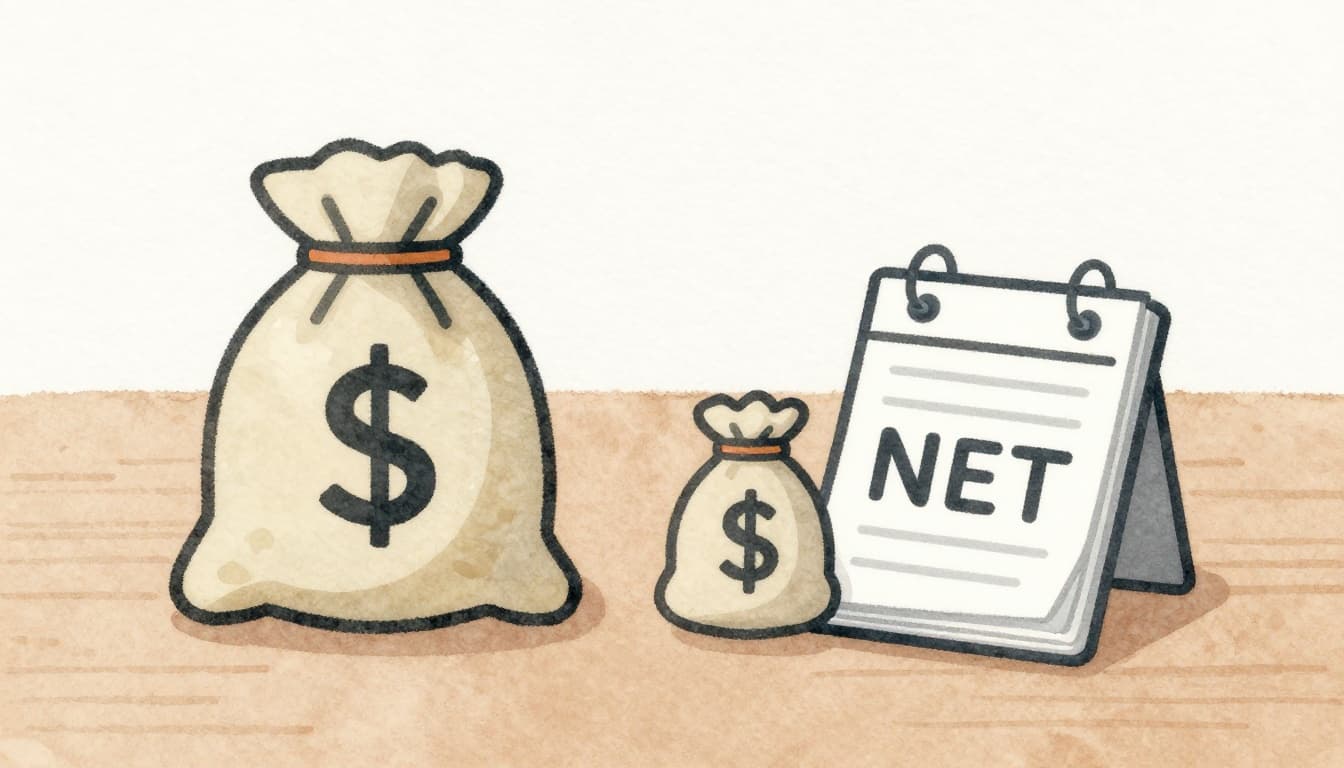
Know both. Avoid overspending on gross dreams.
Real-World Examples and Common Mix-Ups to Avoid
Hourly worker earns $15 times 40 hours. Gross: $600 weekly. Deduct 22% taxes, insurance. Net: $468. Budget groceries on that net.
Coffee shop again. $10,000 sales minus $4,000 goods: $6,000 gross. Minus $3,500 overhead: $2,500 net. Owner sees profit clear.
Mix-ups happen. Gross isn’t take-home. Ever wonder why a raise feels tiny? Deductions eat most.
Net can go negative. Business spends too much. Gross stays positive.
Myths busted: They’re not interchangeable. Negotiate job offers on gross. Live on net.
Lenders use gross for approvals. Track both in apps. Questions like this keep finances straight.
For business angles, see US Chamber’s net vs gross guide.
Spot these gaps daily. Better decisions follow.
Gross income totals earnings before cuts. Net income leaves what’s real after all subtracts. Examples show the shrink. Differences matter for taxes, budgets, profits.
Use net for daily plans. Gross for big goals or filings. Check your next stub today. Share if this cleared it up. What confuses you most? Comment below.
You’re set now. Smarter money moves ahead.