Picture this: you grab coffee with a client, drive to a meeting, or stock your home desk with paper. These small costs add up fast. Yet many folks miss out on slashing their tax bill because they skip the right deductions.
The IRS lets you deduct expenses that are ordinary and necessary for your business or job. Ordinary means common in your line of work. Necessary means helpful to get the job done. Self-employed people claim these on Schedule C. That lowers your adjusted gross income right away. Employees face tougher rules. Most can’t deduct unreimbursed job costs anymore, thanks to changes made permanent in 2026. But educators still get up to $300 for classroom supplies.
For 2026, key updates include the standard mileage rate at 72.5 cents per mile. Meals with clients stay at 50% deductible. Employer snacks drop to 0%. The standard deduction rises too: $16,100 for singles and $32,200 for married filing jointly. Startup costs qualify up to $5,000.
This post breaks it down. You’ll learn IRS basics, top deductibles like home office and vehicle use, what never works, and smart tracking tips. By the end, you’ll spot winners easily and save big. Let’s dive in.
Grasp the IRS Rules: What Counts as a Deductible Expense?
Every deduction starts with two tests from the IRS. Your expense must be ordinary and necessary. Ordinary fits what others in your field spend on. Necessary helps your business thrive, even if not required.
Self-employed folks deduct these on Schedule C. That pulls them above the line, so you don’t need to itemize. Employees lost most unreimbursed deductions after 2017. The suspension became permanent for 2026 under recent laws. Only teachers keep a small break.
Documentation matters more now. The IRS wants proof like receipts and logs. Keep notes on purpose right away. For deeper rules, check the IRS guide to business expense resources.
Here’s a quick comparison:
| Expense Type | Self-Employed | Employees (2026) |
|---|---|---|
| Home Office | Yes, exclusive use portion | No, unless educator supplies |
| Meals (Business) | 50% with client present | No unreimbursed |
| Travel/Mileage | 72.5 cents/mile or actual | No unreimbursed |
| Supplies | Full if business-only | No unreimbursed |
Self-employed win big here. Employees, push for reimbursements instead.
Self-Employed vs. Employee: Key Differences That Affect Your Deductions
Self-employed people treat business costs as direct offsets to income. You report on Schedule C. That shrinks your taxable profit before other calculations.
Employees can’t claim most unreimbursed items. No home office. No mileage. No tools you buy yourself. Teachers deduct $300 max for supplies. That’s above-the-line, so it works with the standard deduction.
In addition, startup costs help new self-employed. Deduct up to $5,000 right away. Phase it out if over $50,000 total. Amortize the rest over 15 years.
These splits matter. Know your status first.
Ordinary and Necessary: The Simple Test Every Expense Must Pass
Apply the test to each cost. A freelance writer buys a laptop. That’s ordinary because writers need one. Necessary because it helps create work.
Coffee alone at lunch? No. That’s personal. Coffee during a client chat? Yes. The business purpose seals it.
Reasonable amounts count too. Splurge on a luxury yacht for fishing trips? Forget it. Stick to what’s accepted.
Examples clarify. Supplies like paper pass for any business. A gym membership? Only if you train clients there.
Everyday Expenses You Can Deduct in 2026
Focus on winners first. Home office, vehicles, meals, and gear top the list. Rates update yearly, so note 2026 specifics.
Home office works if you use the space exclusively for business. No guest room double-duty. Vehicle deductions reward good logs. Meals need a business chat. Equipment gets fast write-offs.
Choose methods wisely. Mileage simplifies. Actual costs suit heavy users. Always tie to business.
For a full Schedule C list, see this complete guide for self-employed.
Home Office and Supplies: Turn Your Workspace into a Tax Win
Claim your home office share of rent, utilities, or mortgage. Measure square footage. Use the simplified way: $5 per square foot, up to 300 feet for $1,500 max. Or calculate actuals for bigger savings.
Supplies deduct fully. Paper, ink, software. Buy for business only. No personal printer share.
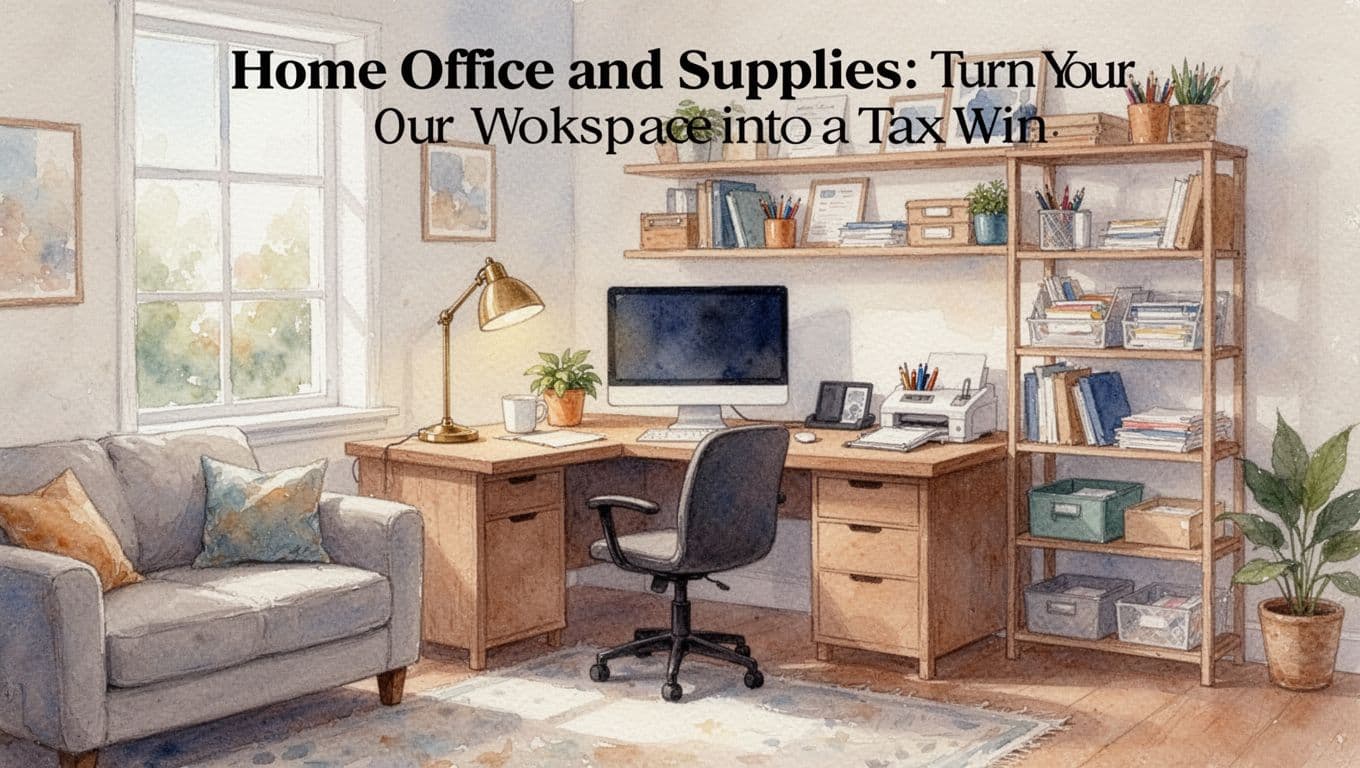
This setup qualifies. Exclusive use proves it. Track repairs too, like painting that corner.
Vehicle and Travel: Mileage Rates and Rules That Add Up Fast
Drive for clients? Log every trip. 2026 rate hits 72.5 cents per mile. Multiply miles by that. No commuting counts.
Records need date, miles, destination, purpose. Apps help. Or use actual costs: gas, repairs, insurance pro-rated by business miles.

Overnight travel deducts full hotel and 50% meals. Local trips use mileage.
Pick one method per vehicle per year. Switch later if needed.
Meals and Equipment: Latest Deduction Percentages to Know
Business meals deduct 50%. You or employee must attend. Client present helps. No lavish spending.
Company parties or events? 100% if for all staff.
Equipment gets Section 179 up to $2.56 million. Bonus depreciation at 20% for 2026. Place in service after rules apply.

Startup costs cap at $5,000. Great for new ventures.
Red Flags: Common Expenses the IRS Won’t Let You Deduct
Not everything goes. Personal costs never qualify. Fines, federal taxes, full entertainment stay off.
Separate business from fun. Golf with a client? Green fees no. Lunch yes.
For 2026 non-deductibles overview, review this deductible and non-deductible guide.
Entertainment and Personal Perks That Stay Off Your Tax Form
Tickets to games, concerts, golf outings. Zero deduction. Even with clients.
Office perks like personal gym? No. Political donations, penalties, clothes (unless uniforms). Keep it business-tied.
Personal lunches fail the test. Family dinner? Out.
New 2026 Limits on Meals and Other Sneaky Non-Deductibles
Employer meals on-site drop to 0%. No more 50% for snacks or cafeterias.
Travel meals still 50% if business. Unreimbursed employee costs? Gone for most. Fines from traffic tickets? Never.
Half of lobbying counts against you. Watch club dues unless business-only.
Track Like a Pro: Best Ways to Prove Your Deductions Come Tax Time
Proof wins audits. Use separate business cards and accounts. Note purpose on receipts.
Review quarterly. Apps scan and categorize. Mileage trackers use GPS.
Contemporaneous means record soon after spending. Courts like that.
See IRS tips in their credits and deductions page.
Tools and Habits That Make Recordkeeping Easy and Audit-Proof
QuickBooks or Expensify auto-track. Bank feeds pull data. Mileage apps like MileIQ log automatically.
Separate emails for business. File digitally. Backup everything.
Annual mock audit checks your work. Fix gaps early.
Spot ordinary and necessary costs. Grab home office, 72.5-cent mileage, 50% meals, and supplies. Dodge entertainment, personal items, and employer snacks.
The standard deduction jumps help too. Still, deductions lower AGI first for self-employed.
Consult a tax pro. Rules fit your setup best. What’s your top deduction story? Share below. Subscribe for more 2026 tips. You got this; file smarter next year.