One tiny math error on your tax return can cost you hundreds in penalties or trigger months of IRS delays. You’re rushing through your 2025 return next April, and suddenly, a simple slip-up flags your filing. It happens to millions every year.
The IRS catches millions of errors annually, from nearly 2.5 million math mistakes back in 2017 to ongoing issues like wrong filing status, misspelled names, mismatched Social Security numbers, bad bank details for refunds, and botched credits. These pile up fast, especially with the April 15, 2026, deadline looming for 2025 returns. Filing too early without all your W-2s or 1099s makes it worse.
You can dodge all that hassle, though. Avoiding these common tax filing mistakes saves you time, money, and plenty of stress, so you get your refund quicker. In this post, we’ll walk through the top 10 with easy fixes; stick around to nail your return.
Personal Info Slip-Ups That Delay Your Refund
You enter your name or filing status wrong, and the IRS kicks your return back. These basic errors top the list of flagged issues each year. They delay refunds by weeks or trigger audits. Direct deposit speeds up payments, but only if details match perfectly. Let’s fix these now so your 2025 return processes fast.
Picking the Wrong Filing Status
Your filing status sets your tax brackets and deductions. Pick the wrong one, and you overpay or invite scrutiny. Single works if you’re unmarried by December 31, 2025. Married filing jointly often saves couples the most; both spouses combine income. Head of household fits if you’re unmarried, cover over half home costs, and support a qualifying dependent like a child.
Life changes trip people up. You divorce mid-2025? Switch to single or head of household if you qualify. A new baby means check head of household perks. Rules stay the same as 2024, but standard deductions rise: $15,750 for single filers, $31,500 for joint.
| Filing Status | 2025 Standard Deduction |
|---|---|
| Single | $15,750 |
| Married Filing Jointly | $31,500 |
| Head of Household | $23,625 |
Wrong status flags audits because it affects credits too. Use the IRS filing status tool to confirm. Double-check after marriage or separation. This simple step avoids rejected returns.
Name and SSN Mismatches
Names must match your Social Security card exactly. Forget a middle initial or hyphen, like “Mary-Jane Smith” as “Mary Jane Smith,” and your e-file rejects. The IRS cross-checks with SSA records first.
A recent name change after marriage causes this often. You update your license but skip SSA. Result? Processing stalls; refunds mail slower. Dependents’ SSNs need perfection too, or someone else claims them by mistake.
Call SSA at 800-772-1213 for updates before filing. Then verify on your return. Check the IRS name matching FAQ for fixes. E-filers catch most typos upfront. Print your Social Security card nearby as you type.
Wrong Bank Routing or Account Numbers
Direct deposit cuts refund time to 21 days versus six weeks by mail. But transpose a digit in your nine-digit routing or account number, and funds bounce back. The IRS mails a check then, adding delay.
You grab numbers from a check, but banks use different routing for ACH. Your refund lands in a stranger’s account rarely, yet it happens. Paper filers face extra risks without auto-checks.
Grab numbers from online banking or a voided check. Confirm with your bank. See IRS tips on direct deposit setup. Test with a small transfer if unsure. Accurate info means cash hits fast.
Math Errors and Forgotten Signatures
Simple slips like bad math or no signature top IRS rejection reasons. The agency sends several million math error notices each year, often for addition goofs on W-2 totals or schedules. Forgetting your signature makes the whole return invalid, so processing stops cold. Both cause delays, penalties, or manual reviews. You can fix them easily, though. E-filing software catches most math issues upfront. Always review before you hit submit, as the IRS advises.
Basic Calculation Blunders
You add up W-2 wages wrong, and your total income jumps or drops. That happens often on Schedule 1 or main Form 1040 lines. For example, three W-2s show $50,000, $30,000, and $20,000. You punch in $90,000 instead of $100,000. Boom, mismatch with employer reports.

These errors trigger quick IRS fixes, but you get a notice later. New rules under the IRS Math and Taxpayer Help Act make those letters clearer, pinpointing the exact line. Still, delays hit refunds by weeks. Paper filers risk more because no auto-checks run.
Grab a calculator for totals. Better yet, use tax software; it adds automatically and flags odd numbers. Then scan every figure once more. This keeps your 2025 return clean.
Skipping the Signature
No signature means no valid return, period. The IRS rejects it outright for paper or e-file. Joint filers need both spouses to sign; one miss voids everything.
E-filing uses a five-digit PIN as your electronic signature. Pick any numbers except all zeros, plus your prior-year AGI or DOB for verification. It counts just like ink on paper. Check the IRS electronic signing guide for steps.
Software prompts you, so few forget now. But print and sign Form 8879 if your preparer needs it. Double-check the box before transmit. This one step speeds approval fast.
Missing Income or Claiming Unqualified Breaks
You skip a side gig payment, and the IRS notices later. Or you claim a credit without checking rules, which sparks an audit. These mistakes cost big because the IRS matches your return against employer and bank reports. Penalties hit 20% on underpaid tax, plus interest. However, you avoid trouble by reporting everything and verifying eligibility first. Let’s break down the main pitfalls.
Overlooking Side Income Sources
Freelance work slips your mind easily. You drive for Uber a few times, earn $1,000, but forget to list it. Wages from part-time jobs count too, even small checks. Dividends from investments add up fast if ignored.
Platforms send 1099-NEC forms for $600 or more in services. Uber or Venmo might issue 1099-K only over $20,000 and 200 transactions in 2025, yet you report all anyway. No form doesn’t excuse skipping it. For example, that $800 freelance gig needs Schedule C entry, plus self-employment tax if over $400 net.

Audits follow mismatches. Track payments in a spreadsheet all year. Pay quarterly estimates if you owe $1,000 plus. This keeps you safe and cuts surprises.
Ineligible Deductions and Credits
You grab the Earned Income Tax Credit without qualifying income limits. EITC fits low-to-moderate earners, U.S. citizens with kids under 19 (or 24 if students). Investment income can’t top $11,600. Claim it wrong, and you repay with penalties.
Child and Dependent Care Credit trips others. It covers up to $3,000 for one kid under 13, or $6,000 for two plus, but only if care lets you work. You need the provider’s tax ID. Spouses file jointly usually; separate filers rarely qualify.
Check IRS Publication 503 for exact rules. Software quizzes help, but verify yourself. Claiming without proof invites denial and extra taxes.
Rushing to File Before Docs Arrive
January hits, and you e-file without W-2s or 1099s. Employers send them by January 31, 2026. Mismatches delay processing weeks. Amendments cost time and fees later.
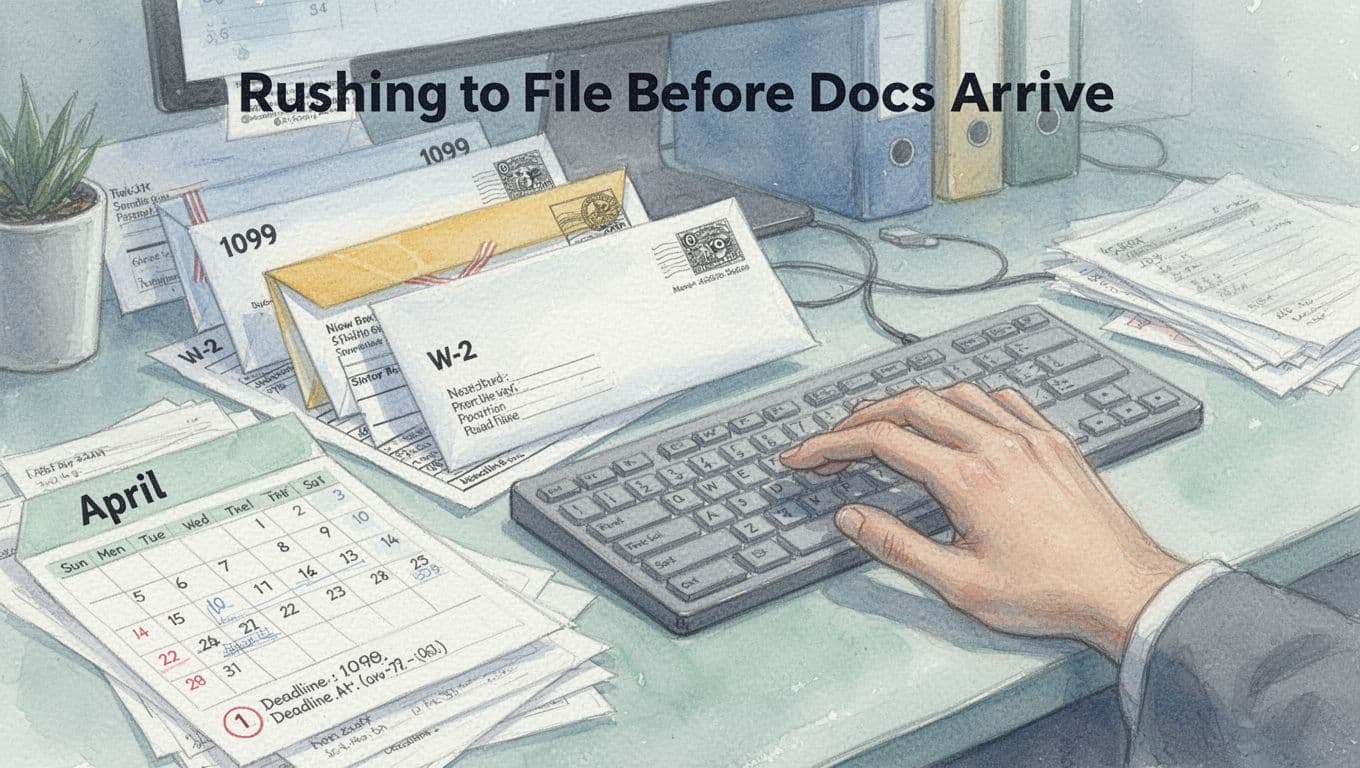
The IRS cross-checks everything. Wait, or request an extension to October. Gather forms first via mail, employer portals, or IRS transcripts. See their advice on gathering all tax info. Patience pays off with faster refunds.
Ignoring Old Tax Return Goofs
You pull out last year’s forms to prep your 2025 return. Suddenly, a math slip or missed deduction jumps out. Many folks spot these goofs now, but they ignore them. That choice bites back hard. Penalties grow, interest piles on, and audits loom larger over time. The IRS sends notices months later, so act first. Fixing old errors now saves cash and stress.
Spot Old Errors While Prepping This Year
Gather your 2024 papers alongside 2025 docs. Compare W-2 totals or check deduction lists. For example, you skipped a $2,000 home office write-off last year because rules confused you. That alone means a bigger refund today. Software often flags mismatches too.
Life changes reveal issues, like adding a dependent late. However, wait until your original return processes fully. Then review line by line.
Dangers of Waiting Too Long
Delays let penalties snowball. You face up to 25% on unpaid tax for late fixes, plus interest from the original due date. Federal rates add 3% quarterly, so small owes grow fast. Audits hit if income mismatches linger. File amended returns within three years for refunds, or two from payment date. After that, you lose out.
Most importantly, prompt action cuts risks. IRS notices arrive slow, sometimes a year later.
File Form 1040-X in Simple Steps
Grab the latest Form 1040-X from IRS.gov. List original amounts in column A, changes in B, and corrects in C. Explain in Part III, then attach your full amended 1040.
E-file for 2024 or 2025 if software allows; otherwise mail to your state’s IRS center. Pay any balance quick to stop interest. Track progress with the Where’s My Amended Return tool after three weeks. Expect 8 to 12 weeks total. You got this; one form unlocks your money.
Pro Tips to File Flawlessly This Tax Season
You’ve seen the top pitfalls that snag filers every year. Now flip the script. These straightforward steps help you avoid errors on your 2025 return. E-file catches math slips and mismatches upfront, so refunds hit faster. Plus, software flags odd entries before you submit. Follow these, and you’ll wrap up stress-free by April 15, 2026.
Switch to E-Filing and Review Twice
Start with e-filing; it slashes mistakes because built-in checks spot issues instantly. The IRS still sends millions of math error notices yearly, but e-filers dodge most. After software runs its scan, read your full return line by line. Check names, SSNs, income totals, and bank details one more time. This double-review catches what programs miss.

Grab Free Tools and Track Gig Work
Use IRS Free File if your income stays under $89,000; it guides you through forms at no cost. Or pick trusted software for extras like state returns. Meanwhile, gig trends ramp up for 2026 filings. Platforms issue 1099-K only over $20,000 and 200 transactions, yet report every dollar over $400 yourself. Log payments and expenses now to offset self-employment tax.
Keep Records and Seek Pros When Needed
Save receipts, W-2s, and bank statements for three years, per IRS record rules. They back deductions if questions arise. Got rentals, businesses, or investments? Hire a pro via the IRS preparer directory. They’ll handle complexities you skip.
There you go. Nail these tips, and your return sails through. Get that refund quick and move on.
Conclusion
You now know the top pitfalls like wrong filing status, math slips, and skipped side income. These snag millions each year and delay refunds. Simple checks fix them all.
E-file with IRS Free File or software to catch errors upfront. Review every line, grab all docs first, and fix old goofs with Form 1040-X. One careful review can mean a bigger refund faster.
Bookmark this for April. Share it with friends facing 2025 returns. Ready to file right? Head to IRS.gov now and start strong.