Tax season hits hard every year. You stare at pay stubs and wonder if you’ll owe big or get a refund. Early estimates for your 2025 federal income tax stop those surprises. They help you adjust withholdings now and avoid penalties later.
This guide shows you how. We use the latest 2025 brackets and deductions for taxes filed in 2026. Follow these steps at home. No math degree needed. Just grab a calculator or phone app. We focus on US federal taxes only. State rules differ.
You’ll pick your filing status first. Then add up income and subtract deductions. Apply brackets step by step. Check with free tools. Plus, note changes that cut your bill. Start today. Plan ahead for April 15, 2026. Let’s make it simple.
Pick Your Filing Status and Check the 2025 Tax Brackets
Your filing status sets everything in motion. It decides your tax brackets and standard deduction. Choose wrong, and your estimate goes off track. The IRS lists four main options: single, married filing jointly, head of household, or married filing separately.
Brackets apply to taxable income only. That’s your total after deductions. Rates stay progressive. You pay 10% on the first slice, 12% on the next, up to 37%. For exact 2025 numbers, see the IRS federal income tax rates page.
Here’s a quick table of all brackets. Use it to match your status.
| Tax Rate | Single / Married Filing Separately | Married Filing Jointly | Head of Household |
|---|---|---|---|
| 10% | $0 – $11,925 | $0 – $23,850 | $0 – $17,000 |
| 12% | $11,926 – $48,475 | $23,851 – $96,950 | $17,001 – $64,850 |
| 22% | $48,476 – $103,350 | $96,951 – $206,700 | $64,851 – $103,350 |
| 24% | $103,351 – $197,300 | $206,701 – $394,600 | $103,351 – $197,300 |
| 32% | $197,301 – $250,525 | $394,601 – $501,050 | $197,301 – $250,500 |
| 35% | $250,526 – $626,350 | $501,051 – $751,600 | $250,501 – $626,350 |
| 37% | Over $626,350 | Over $751,600 | Over $626,350 |
This table shows how joint filers get wider low-rate bands. Head of household fits single parents. Pick based on your life. Got kids? Check head of household rules. Widowed? See if qualifying surviving spouse applies.
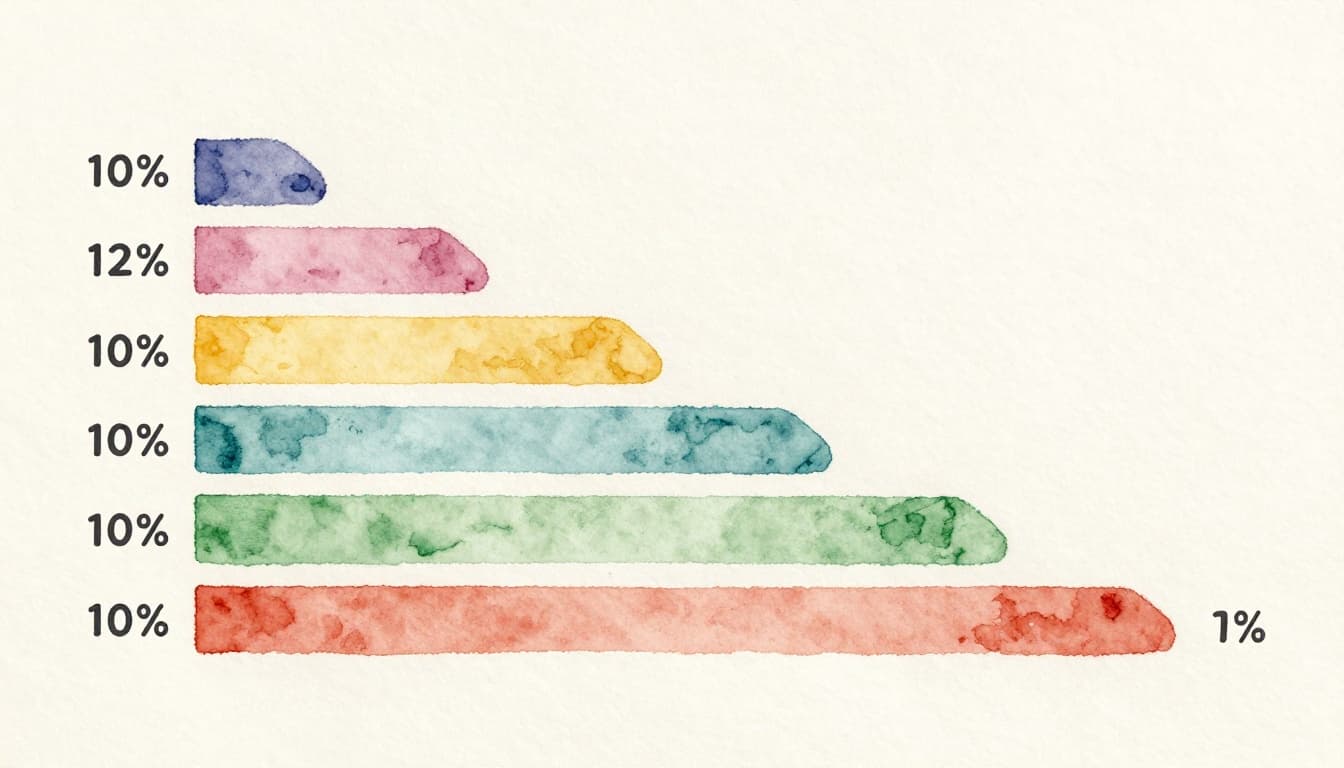
Single Filers: Your Bracket Breakdown
Single covers most unmarried folks. Your first $11,925 faces 10%. Next up to $48,475 pays 12%. Then 22% kicks in until $103,350.
Higher earners hit 24%, 32%, 35%, or 37%. Only the amount in each band gets that rate. So $50,000 total means low rates on the bottom parts. This keeps taxes fair.
Married Filing Jointly: Double the Brackets
Joint filers double many thresholds. First $23,850 at 10%. Then $96,950 at 12%. Standard deduction jumps to $31,500 too.
Couples save big here. But both incomes count together. File separately only if it helps, like uneven deductions.
Gather Your Income Sources and Subtractions for AGI
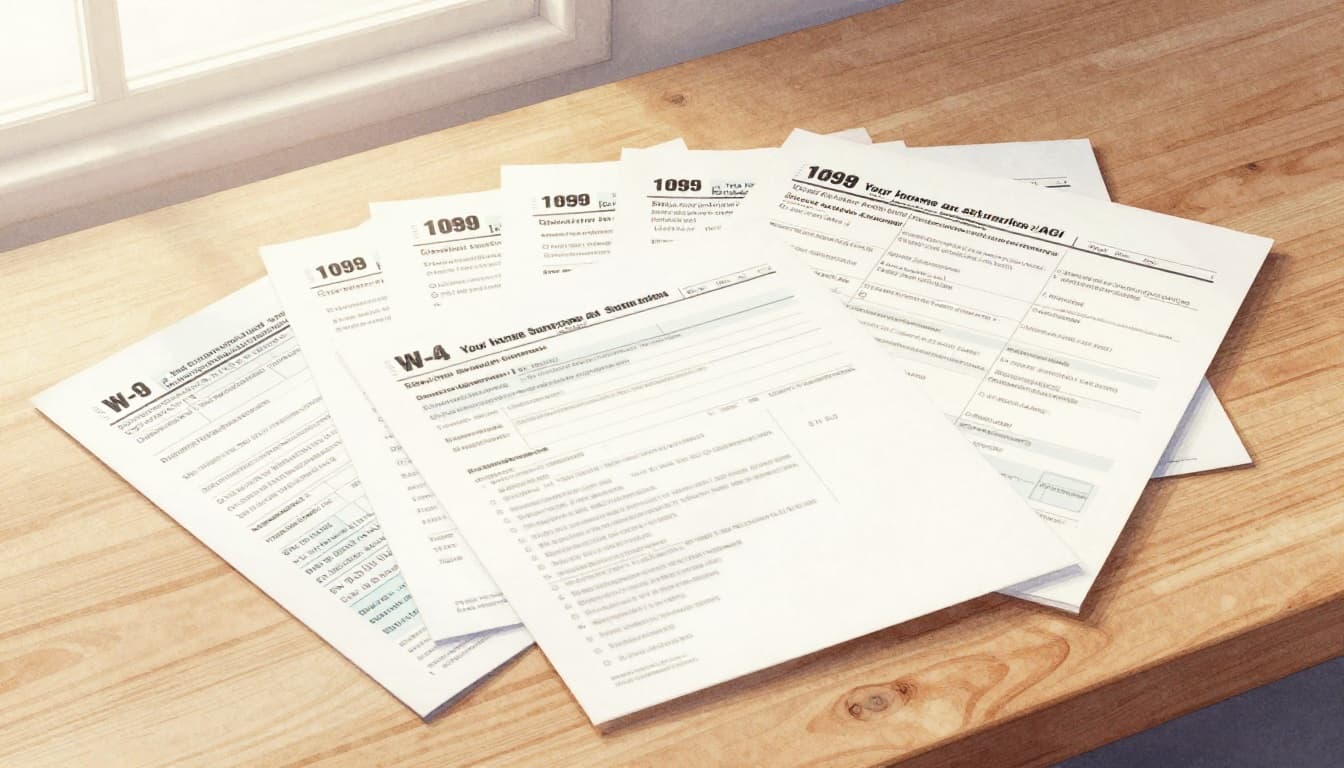
Next, total your gross income. Start with wages from W-2 forms. Add freelance from 1099s. Include interest, dividends, tips. Rental income counts. So do unemployment or crypto sales.
Self-employment adds income plus 15.3% for Social Security and Medicare. Track that separately. Use last year’s return as a guide. It lists what you missed before.
Then subtract adjustments for adjusted gross income, or AGI. Common ones include IRA contributions, student loan interest, or health savings accounts. These lower AGI before deductions.
Common Income Types You Might Miss
W-2 wages top the list. But gigs bring 1099-NEC. Bank interest sneaks in. Unemployment counts fully. Rental properties add Schedule E income.
Crypto gains? Report sales over basis. Side hustles like Uber tally up fast. Check bank apps now. Gather stubs early. This step builds accuracy.
Subtract Deductions to Find Your Taxable Income
Deductions cut AGI to taxable income. Most pick the standard amount. It’s easy, no receipts needed. For 2025: $15,750 if single or married filing separately. $31,500 for joint. $23,625 for head of household. Add $2,000 if over 65 or blind.
Example: $60,000 AGI minus $15,750 standard equals $44,250 taxable. Simple math.
Itemizing works if higher. Total mortgage interest, charity, medical over 7.5% AGI, state taxes up to $10,000 cap. But standard beats it for 90% of filers.
When Itemizing Beats the Standard Deduction
High home interest helps. So do big donations. State taxes hit the SALT cap at $10,000, or $5,000 if married separately. Medical bills over threshold qualify.
However, track everything. Software helps compare. Most stick with standard for speed.
Apply the Brackets and Adjust for Credits Step by Step
Now tax your taxable income. Use brackets from your status. Multiply each slice by its rate. Add them up.
Take single filer, $44,250 taxable. First $11,925 at 10% equals $1,192.50. Next $32,325 (44,250 minus 11,925) at 12% equals $3,879. Total tax: $5,071.50.
Subtract credits next. Child tax credit gives $2,000 per kid under 17. Phases out over $150,000 single. Earned income credit helps low earners. Check withholdings on paystubs. Compare to this total for refund or owed amount.
Self-employment tax adds 15.3% on net earnings. Estimate that too.
A Real-Life Example to Copy
Single, $60,000 gross wages. No adjustments, so AGI $60,000. Standard deduction $15,750. Taxable: $44,250.
Breakdown in table:
| Bracket Portion | Rate | Tax |
|---|---|---|
| $0–$11,925 | 10% | $1,192.50 |
| $11,926–$44,250 ($32,325) | 12% | $3,879 |
| Total | $5,071.50 |
One child? Subtract $2,000 credit. Tax drops to $3,071.50. If withholdings total $5,500, expect $2,428 refund. Plug in your numbers now.
Free Tools That Do the Math for You Instantly
Manual math works, but tools speed it up. IRS Withholding Estimator on irs.gov adjusts paychecks. Enter pay, status, deductions.
Try TurboTax TaxCaster. Answer quick questions on income and credits. It spits out refund estimate fast.
H&R Block calculator covers new laws too. TaxSlayer and NerdWallet offer free versions. All use 2025 brackets. Run your manual total through one. Match them for confidence. Low AGI? IRS Free File fills returns free.
2025 Tax Changes That Could Lower Your Bill
Standard deductions rose with inflation. Single now $15,750, up from prior years. Brackets shifted higher too.
SALT cap stays $10,000. No big new deductions confirmed yet. Child credit holds at $2,000. Watch for tips or overtime rules, but check irs.gov.
File by April 15, 2026. Extensions add time, but pay owed then. These tweaks mean lower bills for many. Review your situation.
You now know the steps: status and brackets, income to AGI, deductions, calculate tax, tools, changes. Start your estimate today. Grab a free tax calculator and test numbers.
Bookmark this for filing season. Share with friends stressing over taxes. You’ve got this. Taxes done easy.
Frequently asked questions: What if I have side income? Add it to AGI. Credits first or deductions? Deductions before brackets, credits after. Ready?